Tag: natural-healing

  • Reclaiming My Roots: A Full-Circle Moment in My Healing Journey

    Reclaiming My Roots: A Full-Circle Moment in My Healing Journey

    A few weeks ago, I was FaceTiming with my grandma and telling her about some of the acupuncture points I’ve been learning recently.

    I shared them with her because she had been trained in Traditional Chinese Medicine (TCM) as a young girl by her father—my great-grandfather. In fact, he was a renowned TCM practitioner with his own clinic before the Cultural Revolution broke out in the early 1960s.

    What my grandma said next completely shifted my knowledge and understanding of my heritage.

    “我的姥爷也是医生。我们家就是职业医生。”
    “My grandfather was also a TCM doctor. In fact, the trade of our family has always been medicine.”

    I was shocked. I had always known about my great-grandfather, but I didn’t realize I came from a lineage of traditional Chinese medicine doctors.

    That knowledge felt like a full-circle moment. Over the past few years, I’ve been diving deeper into holistic health and TCM—driven by nothing more than personal curiosity. And now, I was learning that this path has been within my bloodline all along, not to mention a meaningful step in a much longer journey: one of reclaiming and even celebrating my heritage as a Chinese American.


    As with many immigrants, there’s often a strong desire to assimilate—to fit in and feel like you belong in your new home. When I immigrated to the U.S. at 12, I vividly remember judging, rejecting, and even trying to forget my heritage.

    I didn’t want to be “too Asian.”
    I avoided hanging out in large groups of Asians.
    I prided myself on having mostly non-Asian friends, as if that somehow proved I had broken the stereotype that “all the Asians hang out together.”

    When my friends and I went out to eat, I chose anywhere but a Chinese restaurant.
    I even tried to forget memories from my childhood, telling myself I had “moved on.”

    Looking back now, I can see how extreme—and painful—that disconnection was.

    Like tannins in wine, I too softened with age. As much as I had tried to forget my past, a quiet yearning began to grow within me—a desire to return to my roots.

    It started with cravings for Chinese food. That “I’m home” feeling when walking through the aisles of an Asian grocery store, spotting foods like dried squid, seaweed, and fermented tofu—items that might seem foreign or even repulsive to others but feel so familiar and comforting to me.
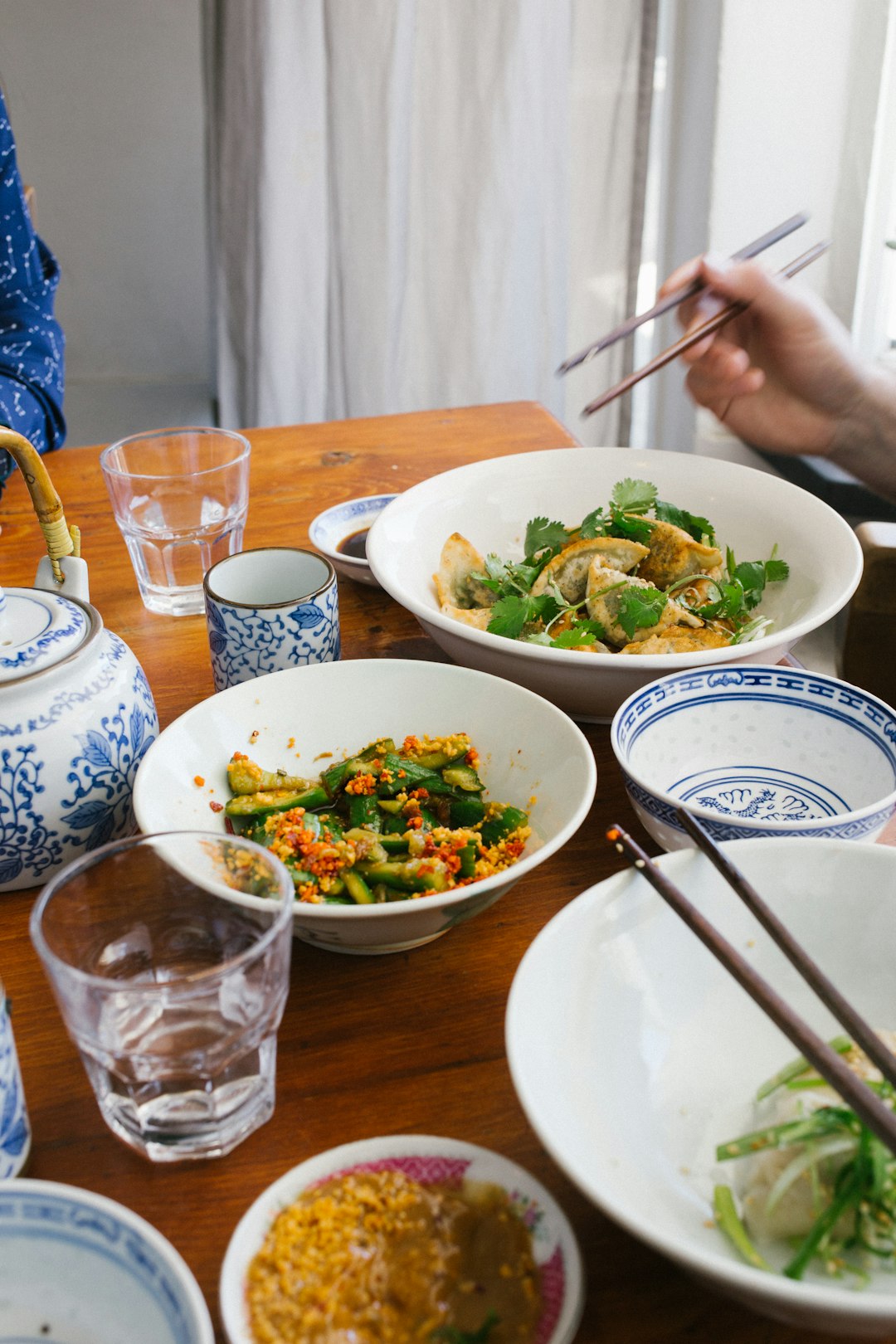
    cooked food in bowls

    Because I haven’t spoken, read, or written Chinese on a daily basis for two decades, my language skills have become rusty. But two years ago, I felt a deep desire to reconnect. I set a goal to study Chinese for at least an hour each week.

    Now, as I explore TCM more deeply, it’s been especially rewarding to be able to read ancient texts in Chinese. So much meaning gets lost in translation, and being able to understand the original language gives me direct access to the richness and nuance of the practice.

    I’ve also begun to recall so many wellness habits and philosophies my grandparents passed down when I was young—wisdom I had taken for granted at the time. Things like:

    • A central philosophy: Health is wealth. “If you don’t have health, you don’t have anything,” my grandma still reminds me.
    • A technique from my grandpa: massage a pressure point on the back of your neck when you feel sickness coming on.
    • A daily wellness drink: my grandma prepares a blend of over 10 types of grains and TCM herbs to nourish the body each morning.
    • A simple practice: sit on the balcony or go outside to soak in sunlight (晒晒太阳), especially important as we age.

    As a little girl, this was just what my family did. But now, I see how much these practices have influenced me—and how deeply they’ve shaped my growing passion for Traditional Chinese Medicine and natural healing.

    So hearing that I come from generations of TCM doctors felt like a full-circle moment—marking the end of one chapter (where past wounds were healed) and the beginning of another (where I fully love, celebrate, and reclaim what makes me me).

    It’s been inside me all along:
    My culture.
    The wellness practices of my childhood.
    My lineage.

    I’m not alone. In fact, I have generations of doctors walking with me, supporting me, and cheering me on as I continue this journey in TCM, health, and holistic healing.


    Hi there, 
    Thank you for reading. I sincerely hope the reflection enabled you to look at your culture and heritage through a new lens—a recognition of what a gift it may actually be. 
    
    Best,
    Elinor 

    Inviting You to Reflect on:

    What about your culture, roots, or heritage do you want to reclaim? What are some things already within you that you may have forgotten?

    Are there traditions, stories, or wisdom passed down through your family that you once overlooked but now feel called to explore?

  • What I Learned About Vitamin D and Cholesterol That Blew My Mind

    What I Learned About Vitamin D and Cholesterol That Blew My Mind

    “Your vitamin D is extremely low,” Dr. K said, peering at my bloodwork. “I recommend a high-dose prescription. It’s taken once a week.”

    He paused before continuing, “Another thing that really concerns me is your cholesterol level. It looks hereditary, but I’d still recommend considering a statin—a cholesterol-lowering drug.”

    I sat there taking it all in… and then a memory surfaced.

    “I remember reading something about a relationship between vitamin D and cholesterol,” I said. “Is that a thing?”

    Dr. K looked thoughtful. “Hmm… that’s not something I’ve come across in the literature I’ve read. I can look into it and get back to you.”

    You see, I’m not against medication. But if there’s a natural approach—like spending more time in the sun, adjusting my diet, or exercise more—I’ll explore that first.

    And I did remember seeing something about vitamin D and cholesterol being linked. Curious, I typed into Google:
    “Relationship between vitamin D and cholesterol.”

    As someone who geeks out on health and wellness, I dove in—and what I discovered blew my mind.

    🧬 Cholesterol is a Precursor to Vitamin D

    Wait… what?

    Turns out, we need cholesterol in our skin cells to make vitamin D from sunlight. Specifically, a molecule called 7-dehydrocholesterol (a form of cholesterol) converts into vitamin D3 when exposed to UVB rays.

    This blew me away:

    The chemical formula for cholesterol is C27H46O.
    The chemical formula for vitamin D3 is C27H44O.
    The only difference? Two hydrogen atoms.
    Those two hydrogen atoms are released when our skin is exposed to ultraviolet light.

    Source: Harvard Medical School

    So yes—the link is real. And closer than I ever imagined.

    🌟 Cholesterol Isn’t the Villain We’ve Been Told It Is

    Cholesterol has been demonized in our culture. We seek out “low-cholesterol” or cholesterol lowering foods. We’re taught cholesterol clogs arteries and causes heart attacks. But that’s just one piece of a larger story.

    Cholesterol plays a critical role in the body. Blood cholesterol not only helps create vitamin D, it also converts into hormones, supports brain function, helps form blood cells, and protects our nerves.

    And did you know your cholesterol level can be too low? In fact, low cholesterol is associated with mortality from stroke, heart disease, and cancer. Source: National Institute of Health

    So no—it’s not all bad. Like many things in life, it’s about balance, not elimination. 

    ☀️ Sunlight: Our Primary Source of Vitamin D

    Vitamin D is crucial for healthy bones, muscles, immunity—and may help prevent diseases like diabetes, cancer, and autoimmune disorders. Source: MDPI

    But here’s the catch:
    Diet alone usually isn’t enough to meet our vitamin D needs. The primary source? Sunlight.

    Only one specific type of ultraviolet ray—UVB—can trigger vitamin D synthesis in the body. It photolyzes 7-dehydrocholesterol in the skin, starting the transformation into usable vitamin D3.

    But here’s what blew my mind even more:
    You can be outside and still not get any UVB.

    So even if you think you’re getting sun, your body might not be making any vitamin D.

    ⚖️ Finding the Right Balance

    UVB rays are a double-edged sword. Too little exposure can lead to deficiency. Too much can increase the risk of skin cancer. Same source—radically different outcomes depending on dosage.

    How much is “just right”? That depends on your skin tone, location, and time of year. (This NIH paper helped, but I’m still digging into this.)

    Bottom line: we need moderate, intentional sun exposure to support our vitamin D levels—and, by extension, our overall health.

    📉 Could More Vitamin D Lower Cholesterol?

    I also found studies exploring whether raising vitamin D levels might help lower LDL (the so-called “bad” cholesterol). The evidence is still mixed, but some research shows a possible correlation between higher vitamin D and lower LDL levels.
    Source: Nature

    More research is needed, but it’s a promising area.

    📬 A Follow-Up from Dr. K

    Two days later, Dr. K messaged me.

    “I did some digging and found that there is a relationship between vitamin D and cholesterol production. UVB is the light that converts 7-dehydrocholestrol to Vitamin D3 in the body…”

    💡 So What?

    I feel like I just earned a mini-PhD in vitamin D and cholesterol—ha.

    But seriously, what struck me most wasn’t the science itself. It was how little I actually knew about basic processes in my own body—despite being “well-educated” by traditional standards.

    I had unknowingly formed beliefs based on headlines, ads, and half-truths. That cholesterol is all bad. That the sun rays cause skin cancer. None of it was completely true—or completely false.

    Here’s what I learned instead:

    • Cholesterol is a precursor to vitamin D
    • Their chemical formulas are nearly identical
    • Cholesterol plays essential roles in the body
    • Sunlight, not diet, is our main source of vitamin D
    • We may not be producing vitamin D even when “in the sun”
    • The answer lies in balance, not avoidance

    🔍 The Bigger Lesson

    The truth is often more nuanced than we’re led to believe.

    When it comes to our health—and our lives—we owe it to ourselves to ask better questions, challenge surface-level assumptions, and take radical responsibility for our own well-being.

    Inviting you to reflect on:
    What’s one “truth” you’ve accepted without questioning—about your health, body, or life—that might be worth a second look?