Author: Elinor C.

  • The Power of Contrast: Finding Beauty in Life’s Peaks and Valleys

    The Power of Contrast: Finding Beauty in Life’s Peaks and Valleys

    A ray of sunshine in the midst of a week-long of dreary gray skies.

    The bold, loud opening of Beethoven’s fifth symphony paired with soft and tender melodies.

    Light against darkness.

    The absence of sound when you wander deeper into the forest.

    The warmth and softness of your own bed after two nights of camping.

    Tasting the enhanced sweetness of a watermelon after you put a pinch of salt on it.

    Experiencing the lightness of a healthy body after recovering from the flu for a week.

    Feeling gratitude for a kind and understanding boss when you’ve had a bad one.

    Experiencing the joys of new growth after devastating losses.

    Each of these moments reminds us of a fundamental truth: contrast adds depth, meaning, and richness to our lives.

    Contrast shapes the peaks and valleys of our lives, filling our hearts with abundance, joy, and happiness precisely because we’ve also tasted loss, disappointment, and sadness.

    As much as we try to avoid the lows, without having experienced the lows (or what you did not want), we wouldn’t appreciate the joys of the highs (or what you do want).

    Everyday Lessons in Contrast

    This truth about contrast often comes to light in everyday conversations.

    Just last week, my colleague shared, “If it weren’t for the contrast, I wouldn’t be able to appreciate how much free time I used to have,” referring to the limited free time she now has as a mom to a 1-year-old daughter.

    Reflecting on my own life, I’ve found countless moments where contrast has deepened my appreciation, such as:

    • My now normal work hours when I used to work until 11pm every night
    • The long consulting days for the skills I acquired and now use at work
    • The sun-filled place I now live, compared to my old small and dark apartment
    • An employee-focused culture of my current employer

    The list goes on.

    Contrast, as uncomfortable as it may be at times, is a necessary part of life. It enables us to add new dimensionality to our everyday events and perhaps, identify welcoming changessee the old in new lights and appreciate aspects of past events that we’ve taken for granted.

    Understanding the power of contrast, I have now adopted a new attitude towards the “highs” and “lows” I’ll have in life.

    How I’ve Reframed Highs and Lows

    Highs: I’ve come to see highs (and lows) as a necessary part of life. It will not last forever so enjoy it while it lasts!

    Lows: Rather than dredging it, avoiding it, or pretending it doesn’t exist or will never come, I now embrace it. Why? Embracing the lows allows me to see them as stepping stones to deeper joy, sharpening my gratitude when the highs return.

    Reflecting On Your Own Contrast

    Understanding the role of contrast in your own life can be transformative. Here are a few questions to reflect on:

    • What are the highs and lows in your life to date? How do the lows or the highs enable you to experience the fullness of the other?
    • How will you approach the peaks and valleys in your future?

    By embracing contrast, you might just discover a richer, more meaningful way to navigate life’s peaks and valleys.

    What about you?

    What are the highs and lows in your life to date? How do the lows or the highs enable you to experience the fullness of the other?

    How will you approach the peaks and valleys in your future?

    Subscribe

    Subscribe to a weekly dose of feel-good stories from everyday life in your inbox.
  • Befriend the Unknown: A Shift in Mindset

    Befriend the Unknown: A Shift in Mindset

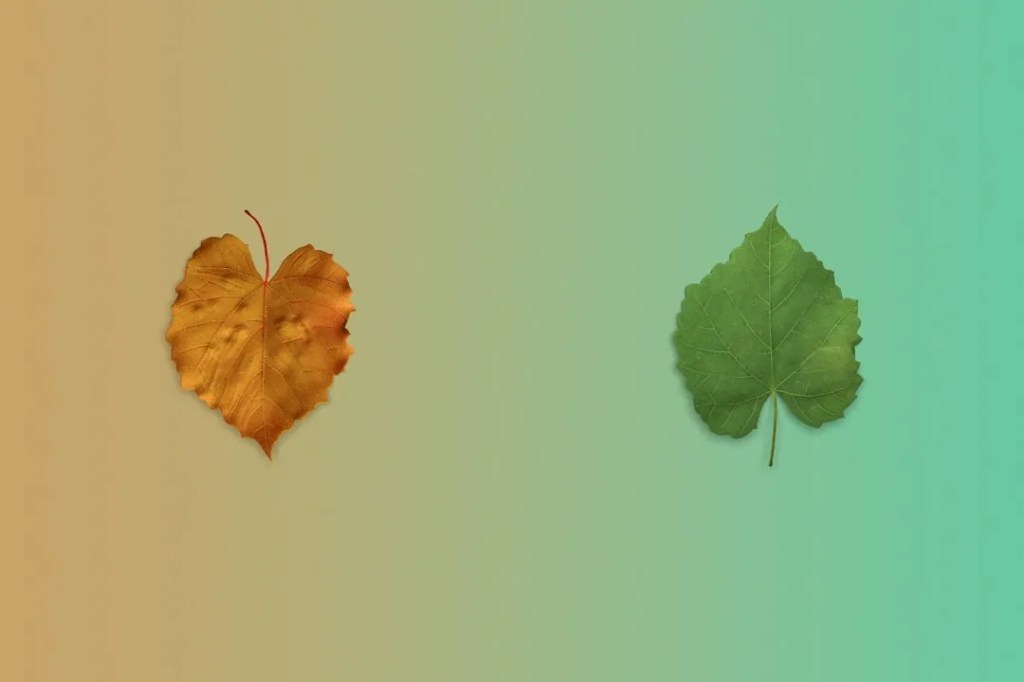
    Photo by Martin Martz on Unsplash

    At 10 a.m., a last-minute “Team Communication” invite from our SVP popped up on our calendars—just three hours before the meeting.

    No context. Just a Microsoft Teams link.

    At 1 p.m., 300+ faces appeared on the call, engaging in lighthearted small talk. But really, we were all bracing ourselves for what was to come.

    It’s fair to say that most of us, myself included, were preoccupied with one question: What’s going to happen to me?

    Understandably, many fear being laid off—this job allows us to provide for our families, pay mortgages, and afford everyday essentials. The thought of giving up our current reality is hard because it feels safe, known, secure.

    On the contrary, the unknown—what comes next—feels terrifying.

    “Katie has decided to leave the organization,” our EVP, Sara, announced. Just last week, she had shared that she, too, was leaving the company.

    They both spoke candidly about their decisions, while reiterating their enthusiasm for the company’s new focus under our new CEO.

    What struck me most wasn’t their departure—it was their attitude toward change.

    “Change excites me,” Katie said, acknowledging the bittersweet moment.

    “Growth requires change,” Sara emphasized, bookending the conversation with this reminder.

    Neither of them flinched in the face of uncertainty. Instead, they welcomed it. There was no hint of fear, no sense of hesitation—only confidence, poise, and authenticity.

    It was an aha moment for me.

    They didn’t deny that change is uncomfortable or that the unknown can be daunting. But they recognized that within discomfort lies an opportunity—for growth, for reinvention, for something greater than what we can currently see.

    I’ve replayed the call in my head several times, and I realize now: I need to adopt a new mindset toward change—one that shifts from fear to a warm embrace.

    Befriend the unknown, because growth requires change.

    What about you?

    What’s your current attitude toward change? What new possibilities might unfold if you befriended the unknown instead of fearing it?

    Subscribe

    Subscribe to a weekly dose of feel-good stories from everyday life in your inbox.
  • The Red Envelope That Taught Me the Joy of Giving

    The Red Envelope That Taught Me the Joy of Giving

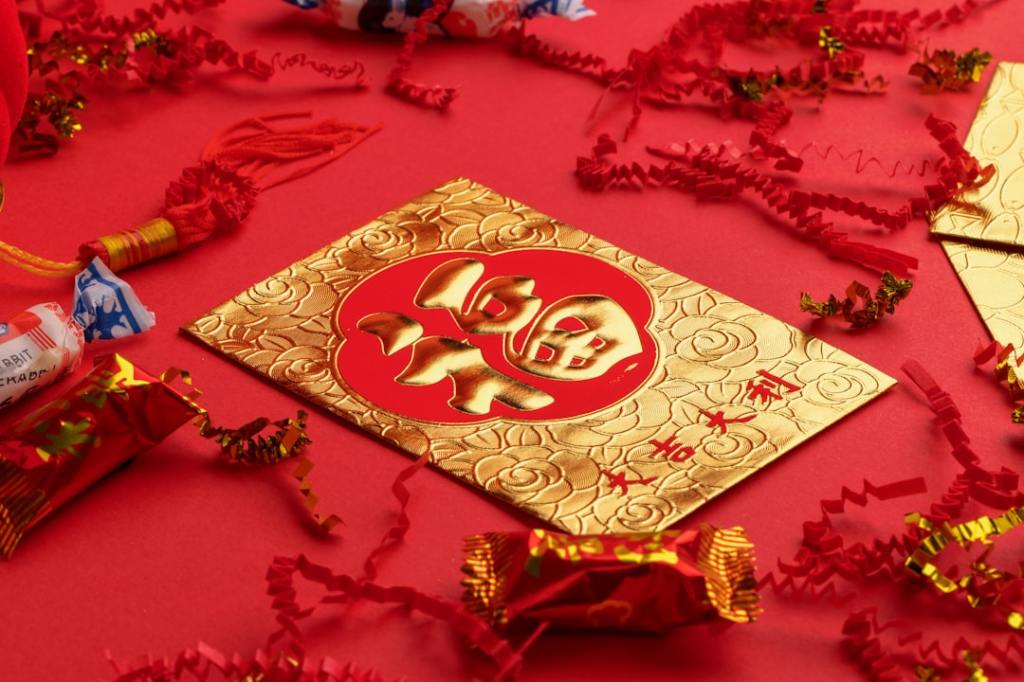
    During our company’s Lunar New Year celebration, I filled several red envelopes with candy for my team, feeling nostalgic as traditional music played in the background.

    Having grown up in China, I had so many heartwarming memories of celebrating Chinese New Year with my family:

    From wearing red from head to toe…

    To eating handmade dumplings freshly boiled as the clock strikes 12…

    To putting up giant red lanterns with my grandpa…

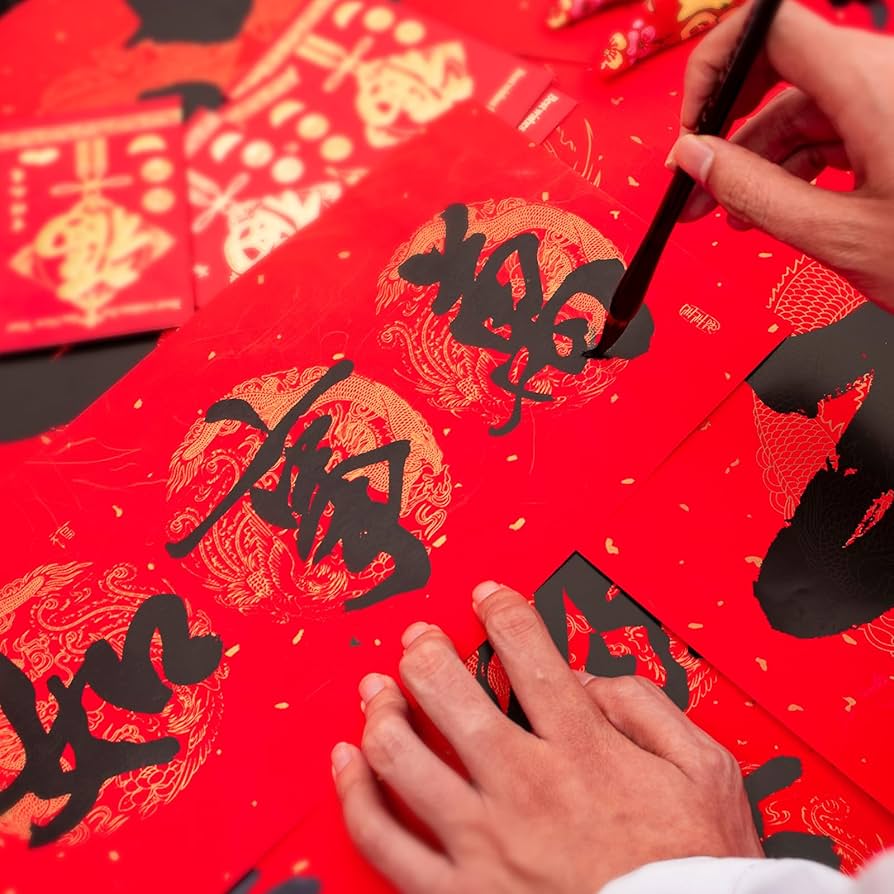
    To writing Chinese calligraphy on red paper to ‘protect’ our house from the evil ‘Nian’ spirit.

    Every year, my cousins and I would look forward the eve of Chinese New Year because that’s when my grandpa would hand out a red envelope to each of us!

    We’d excitedly open the envelope, knowing there would always be a crisp 100 yuan inside.

    To me, the red envelope (紅包) symbolizes the holiday spirit and reminds me of home.

    After passing the red envelopes out to my team, I found that I only had one left. I intended to keep it for myself as a tangible reminder of the joyous memories of my childhood.

    But then, a quiet nudge within me urged me to share the festivity and Chinese tradition with my director, Peter, whom I didn’t know as well.

    It’s not like he will care or notice,” a voice in my head rationalized.

    He looks busy. Now is probably not a good time,” another voice suggested, offering the perfect excuse to postpone (and realistically, never follow through).

    I had every reason to keep it—the nostalgia, the comfort, the personal significance. But the nudge to share my heritage and spread the joy of the day grew louder.

    Cautiously, I took a few steps toward where Peter sat and called out, “Peter?”

    He looked up, anticipating a work-related question.

    “Here’s a red envelope for Chinese New Year with some candies inside,” I blurted out, handing the stuffed red envelope to him.

    His eyes lit up in surprise, his posture shifting from focused to delighted. “Well, thank you!!” he said, his voice warm with appreciation.

    I smiled back.

    The interaction took less than a second. However, I felt a world apart.

    Even though I was the one giving a small gift, it felt like I was on the receiving end of something precious.

    I was blown away by how good it felt to give, even something as small and simple as a fifty-cent red envelope with three pieces of candy inside.

    It felt so good to share and spread a joyous part of my Chinese heritage with others.

    And I was beyond grateful that I had risen above my initial selfish desire to keep the red envelope for myself.

    Through the simple act of giving, I not only felt a deeper connection with others but also a profound realization—our greatest growth comes not in solitude, but through our interaction with others. It is those shared experiences, big or small, that we uncover who we truly are and who we aspire to be.

    What about you?

    When was the last time you chose to share a piece of yourself with others? How did it shape your understanding of connection and personal growth?


    Subscribe

    Subscribe to a weekly dose of feel-good stories from everyday life in your inbox.
  • Facts over Fear—The Power of Seeing Things as They Are

    Facts over Fear—The Power of Seeing Things as They Are

    And there will be job eliminations…” read a company-wide email from our CEO last Friday.

    I was immediately triggered. The memory of layoffs I experienced just two years ago came rushing back, the feelings still fresh in my mind. Experience as the teacher whispered, “You have to look out for yourself.” So, I started doom-scrolling on LinkedIn to see what jobs were available.

    But then I paused.

    I realized that while experience can teach valuable lessons—like warning a child not to touch a hot stove—it can also be harmful. Sometimes, it keeps us trapped in anticipation of pain, even when the present moment doesn’t warrant it.

    Moments like these rob us of the ability to fully experience the present for what it is—good, bad, or neutral. They blur the line between reality and our imagination.

    A recent conversation with a coworker illustrated this perfectly.

    After our VP’s “Ask-Me-Anything” meeting, I caught up with a coworker from my team. He was convinced we were doomed. “It’s obvious our org will be a lot smaller,” he said.

    I blinked in surprise. I had walked out of the same meeting feeling cautiously optimistic. Our VP had said, “Each of you are doing the right work for the organization.”

    Both of us had attended the same meeting. Yet our takeaways were polar opposites.

    This stark difference in perception reminded me how much our individual interpretations can be shaped by emotions and past experiences. It also underscored a truth I often need to revisit: When uncertainty strikes, our subjective judgment is not always reliable. That’s why it’s so important to anchor ourselves to objective facts.

    Here’s what I know for certain:

    • There will be layoffs in the coming weeks.
    • Layoffs will impact corporate employees.
    • Teams that “coordinate work” or “do the same work” will be affected.

    That’s it. No more, no less. Everything else is conjecture.

    This episode brought to mind a fundamental discipline of Stoicism (a school of philosophy that originated in Ancient Greece and Rome), which has guided many through uncertainty and adversity:

    Discipline of Perception: See things for what they are and do our best to remain objective in any circumstances

    Our ability to perceive situations clearly and with discipline often determines the trajectory of our success and happiness. As the Stoic philosopher Ryan Holiday puts it:

    “You will come across obstacles in life—fair and unfair. And you will discover, time and time again, that what matters most is not what these obstacles are, but how we see them, how we react to them, and whether we keep our composure. This reaction determines how successful we will be in overcoming—or possibly thriving because of—these obstacles.”

    As for me, the story of these layoffs will unfold in the coming weeks.

    But in the meantime, I declare:

    • I will choose to focus on the facts. No more, no less.
    • I will choose to control what I can—my thoughts, actions, and reactions.
    • I will choose to see opportunity in every situation.

    Pages: 1 2